Tortoises have existed on Earth for millions of years. Throughout the years, they’ve shown us their remarkable adaptations and diversity across different ecosystems and continents. Regardless of whether they thrive in lush tropical forests or arid deserts, these slow-moving species have evolved into a wide range of unique forms. In fact, each of these species has its own ecological role, behaviors, and fascinating traits. Here, we’re going to take a tour around the world and discover some of the world’s most unique tortoises along with the things that make them special.
Galápagos Tortoise (Chelonoidis nigra complex)

- Size: Up to 900 pounds (408 kg)
- Habitat: Galápagos Islands, Ecuador
- Lifespan: Over 100 years
The Galápagos tortoise is considered the most iconic tortoise in the world. Perhaps its popularity can be attributed to its role in Charles Darwin’s theory of evolution, long lifespan, and enormous size. These giant species can live more than a century, and they’ve been categorized into various subspecies with specific adaptations. You could see some sporting saddleback shapes while others have domed shells. Conservation efforts have been made to preserve their population and prevent extinction.
Aldabra Giant Tortoise (Aldabrachelys gigantea)
- Size: Up to 550 pounds (250 kg)
- Habitat: Aldabra Atoll, Seychelles
- Lifespan: 80–120 years
One of the largest land tortoise species living today is the Aldabra giant tortoise. Usually, you can see them on the remote Aldabra Atoll. These massive tortoises can adapt to tropical, dry environments. They love grazing on leaves, shrubs, and grasses. Compared to the Galápagos tortoise, the Aldabra tortoise thrives in a more secure habitat, far from extinction.
Egyptian Tortoise (Testudo kleinmanni)
- Size: 3–5 inches (8–13 cm)
- Habitat: Northern Egypt, Libya, and Israel
- Lifespan: Up to 70 years
The Egyptian tortoise is considered one of the smallest and rarest tortoise species in the world. Unfortunately, they’ve become endangered because of illegal pet trade and habitat loss. However, despite being tiny, these tortoises are amazingly resilient. In fact, they can survive in harsh desert climates by feeding during the early morning and late afternoon while staying inactive during the hottest times of the day. Their pale, sand-colored shell acts as camouflage while thriving in their arid environment.
Indian Star Tortoise (Geochelone elegans)
- Size: 6–15 inches (15–38 cm)
- Habitat: India, Sri Lanka, and parts of Pakistan
- Lifespan: 30–80 years
These species are named as such due to the amazing star-like radiating patterns on their shells. Among tortoise species, the Indian star tortoise is considered one of the most visually attractive. The markings on their shells serve as camouflage while thriving in forests and dry grasslands. Despite their striking appearance, Indian star tortoise species are frequently targeted in the exotic pet trade, resulting in a dramatic decrease in their population. The good news is that international conservation laws have been protecting them.
Pancake Tortoise (Malacochersus tornieri)

- Size: 6–7 inches (15–18 cm)
- Habitat: Eastern Africa (Kenya, Tanzania)
- Lifespan: 25–35 years
Just as its name suggests, these tortoises have flattened, flexible shells, allowing them to squeeze into tight spaces such as rock crevices to escape from their predators. In contrast to other tortoises, who greatly depend on their hard shells for protection, the Pancake tortoise species rely on their speed and agility. These species living in East Africa are vulnerable to extinction due to pet trade and habitat destruction.
Angonoka Tortoise (Astrochelys yniphora)
- Size: Up to 16 inches (41 cm)
- Habitat: Madagascar
- Lifespan: 50–100 years
These species are native to Madagascar. Like other tortoise species, they are also critically endangered. They are named after the unique, protruding front of their shell, which looks like a plough. They’ve become highly endangered because of extreme poaching and habitat loss. In fact, there are only a few hundred of these tortoise species left in the wild. That’s why conservationists have been working tirelessly to protect this unique tortoise species.
https://www.pexels.com/photo/tortoise-crawling-on-dirt-ground-8058293/
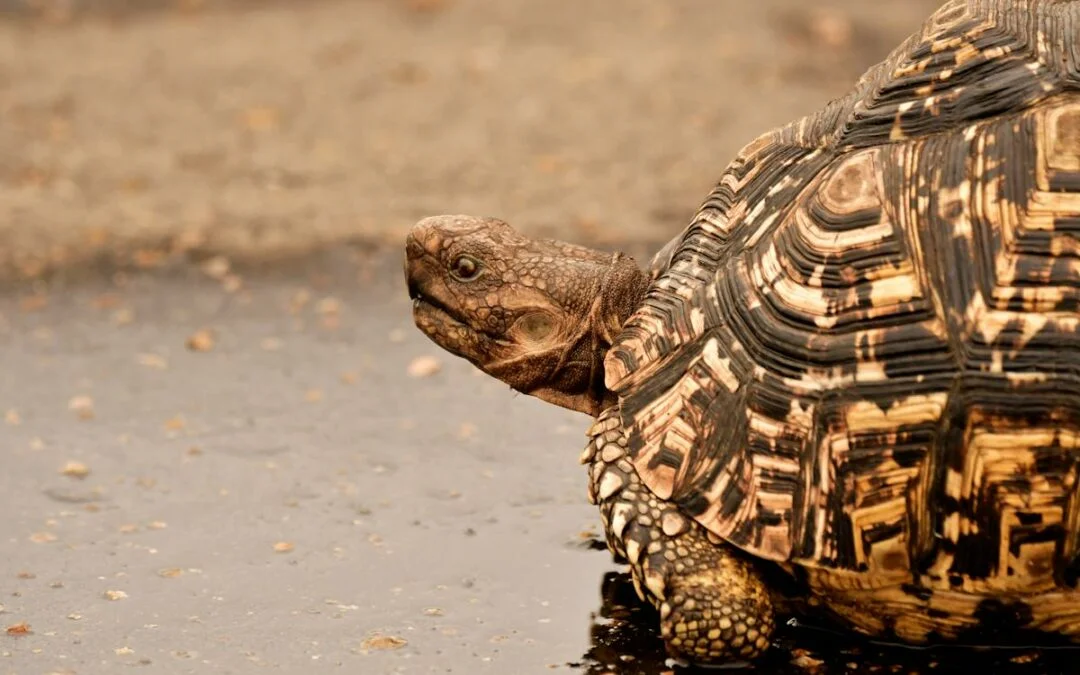
Leopard Tortoise (Stigmochelys pardalis)
- Size: 10–18 inches (25–46 cm)
- Habitat: Sub-Saharan Africa
- Lifespan: 50–100 years
These species are named as such due to their stunning, spotted shells. Among tortoise species, the leopard tortoise is recognized as the world’s fourth-largest tortoise species. They are so adaptable that they can survive in a wide range of environments, from grassy plains to dry savannas. In contrast to most tortoises, the leopard tortoise can swim and often seeks protection in abandoned burrows. With their adaptability, it’s not surprising that they’ve become one of the more common species kept as pets, although keep in mind that they need specialized care.
Burmese Star Tortoise (Geochelone platynota)
- Size: 10–12 inches (25–30 cm)
- Habitat: Myanmar (Burma)
- Lifespan: 50–100 years
The Burmese star tortoise has a close resemblance to the Indian star tortoise when it comes to their features. However, they have more complex and symmetrical star patterns on their carapace. Although they’ve become close to extinction because of illegal collection, the Burmese star tortoise species have become part of successful conservation breeding programs. Now, hundreds of these species are being reintroduced into protected reserves, bringing new hope for their survival.
Gopher Tortoise (Gopherus polyphemus)
- Size: 9–15 inches (23–38 cm)
- Habitat: Southeastern United States
- Lifespan: 40–80 years
The gopher tortoise is considered a keystone species in its native pine forests and sandhills. They love digging burrows that provide shelter to more than 300 other animal species, such as insects, frogs, and snakes. Sadly, due to habitat fragmentation and development, their population has greatly decreased. That’s why conservation efforts have been made not only to preserve these tortoises but also their entire ecosystem.
Speckled Padloper Tortoise (Homopus signatus)

- Size: 2.4–3.1 inches (6–8 cm)
- Habitat: South Africa
- Lifespan: 10–20 years
The speckled padloper is widely recognized as the smallest tortoise species in the world. They thrive in rocky outcrops while feeding on small succulents and plants. This miniature marvel seeks refuge behind their speckled shell; additionally, their tiny size helps them escape from their predators. However, like other unique species, they’ve become threatened with extinction due to illegal collection and habitat loss.
The Crucial Role of Conservation
These remarkable reptiles are not just slow-moving creatures. In fact, they’ve become critical components of their ecosystems, cultural icons, and ecological engineers. But unfortunately, most of the species mentioned here are vulnerable to extinction because of illegal pet trade, climate change, and habitat loss. That’s why conservation efforts have been made locally and globally to ensure that these charming creatures continue to exist for generations to come. Public education campaigns, anti-poaching initiatives, habitat restoration, and breeding programs can really make a big difference. However, it’s essential to have continuous awareness and support.
What Can You Do to Help
Support conservation groups such as the Galápagos Conservancy and Turtle Survival Alliance. Do not purchase wild-caught tortoises. Instead, choose captive-bred tortoises if you want to keep them as pets. Every small action contributes to the larger effort of preserving these magnificent species for future generations.
At Kapidolo Farms, you can find a variety of foods for your tortoise. Aside from tortoise food items, we also offer tortoise supplies. Just email us at kapidolofarms@gmail.com or call us at 215-483-7675.