
One of the most popular species of tortoise, the red-footed tortoise (Chelonoidis carbonaria) has gained popularity as a pet over the years. They have bright colors, small to medium size, and sociable personalities that make them wonderful companions. If you’re searching for an online shop that offers pet tortoise supplies, you’ve come to the right place.
Here at Kapidolo Farms, we offer tortoise food, supplies, and diet items. In this blog post, we’ll explore the basic care requirements for red-footed tortoises. After reading this guide, you’ll have the information needed to choose a supplier for your pet red-footed tortoise’s food, diet items, and supplies.
Understanding Red-Footed Tortoises
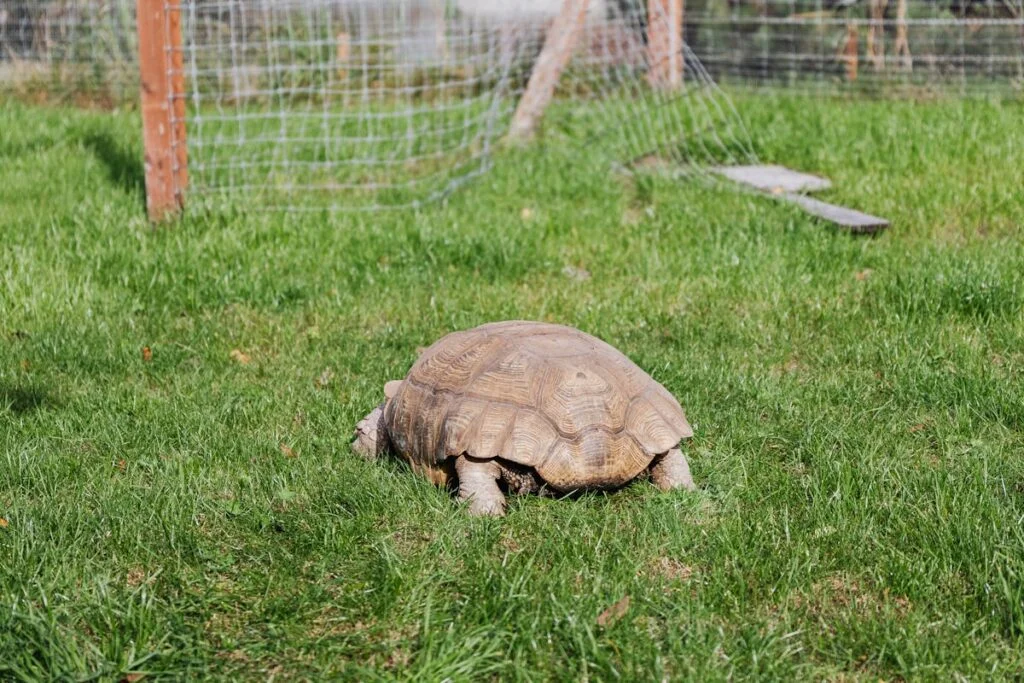
Red-footed tortoises have unique care requirements that every owner should understand. With proper care in captivity, they can live 30-50 years, making them a long-term commitment and lifelong companion.
Natural Habitat
Red-footed tortoises are commonly found in Northern South America and the Caribbean islands. This tortoise species prefers warm and wet habitats in transitional zones between forest and grasslands, also known as ecotone, woodland, or savanna. These are dynamic biodiversity areas where grass and trees come together, serving as buffer zones where different species thrive, including the red-footed tortoise.
Their natural habitat has temperatures around 86 degrees Fahrenheit with high humidity and plenty of rainfall. Temperature and humidity change during the cool wet season from April to August and the warm dry season from September to March. Temperatures typically don’t go lower than 70 degrees Fahrenheit or higher than 95 degrees Fahrenheit.
Red-footed tortoises spend much of their time in areas that offer thermoregulation and hiding spots to stay protected from predators. They prefer areas with burrows, hollow logs, forest debris, and heavy vegetation cover.
Essential Care Requirements

Enclosure Setup
Red-footed tortoises should ideally be placed in an outdoor enclosure. The space needs both direct sun exposure and covered areas for shade.
The enclosure must be constructed with solid walls that the tortoise cannot see through. Tortoises are curious animals, and if they can see through to the other side, they’ll spend hours trying to walk through the fence. Walls must have a minimum height of 1.5 times the length of the tortoise (20-24 inches) and should extend at least 6 inches below ground level to prevent the tortoise from digging underneath.
The enclosure must be made from sturdy materials to protect the tortoise from predators and other pets such as dogs, which can harm tortoises. The enclosure should include insulation like heat lamps to keep the tortoise warm when outdoor temperatures drop below 70 degrees Fahrenheit. Outdoor enclosures can be made from garden sheds, dog houses, or built from scratch. Thermometers must be installed near heat lamps and at the enclosure entrance to properly monitor temperature.
Indoor Housing for Baby Tortoises
Indoor housing is suitable for baby tortoises to ensure they thrive in a proper environment. Enclosures with clear sides, such as aquariums, are not advisable because the tortoise will attempt to walk through the clear glass. Choose a good-sized storage container for baby tortoises. This type of enclosure protects the tortoise from other pets that might harm them.
Cage Size
The enclosure should be 4×8 feet for an adult red-footed tortoise. An indoor enclosure for a baby tortoise can be 3×2 feet. Keep in mind that the tortoise will need a bigger enclosure as it grows.
Substrate
For substrate, choose hardwood mulches like cypress mulch and mix it with coconut fiber, leaf litter, and topsoil. These materials mimic their natural habitat. Don’t use wood shavings, sand, gravel, or small reptile bark because the tortoise can ingest them.
The substrate must be 4-12 inches deep or more because tortoises love to burrow. The substrate should be slightly moist but not excessively wet and muddy to maintain proper humidity in the enclosure. Proper substrate helps maintain the high humidity levels common in their wild habitat.
Hydration
Water must be provided in a shallow, wide dish large enough to allow the tortoise to enter and exit comfortably. Water can also be provided by flooding a small area of the enclosure or using a soaking dish with warm water 2-3 times a week for 15-30 minutes.
Feeding Dish
A flat dish or patio stone can be used as a food dish to prevent the tortoise from ingesting substrate while eating, which can cause intestinal obstruction.
Plants and Shade
Shade, shelter, and food can be provided by planting edible plants in the enclosure. Small shrubs like yellow trumpet flower, desert rose mallow, and Indian mallow can be planted in your pet red-footed tortoise’s enclosure.
Tortoises in outdoor enclosures must have deep shade areas. Deep shade can be provided using awnings, shade sails, shrubs, and trees. Important note: Check how the shade changes throughout the day as the sun moves to ensure adequate coverage.
Maintenance and Cleaning
For tortoises in indoor enclosures, droppings must be removed daily. Substrate must be replenished 1-2 times per month or more whenever necessary. The enclosure and furnishings must be disinfected monthly using a 1-to-10 diluted bleach solution. The enclosure must be rinsed thoroughly with water to remove the bleach solution. Dry the enclosure in direct sunlight to help with the disinfection process.
Outdoor enclosures must be kept free of droppings through regular cleaning. Water bowls must be cleaned and sanitized every 2-4 weeks.
Temperature Requirements
The basking area should be 95-100 degrees Fahrenheit. The warm side, not directly near the heat lamp, should be 80-86 degrees Fahrenheit. The cool side, farthest from the heat lamp, should be 70-80 degrees Fahrenheit.
Thermometers must be placed in the enclosure to monitor temperature accurately. Ceramic bulbs can be used in heat lamps. An infrared laser thermometer can be used to check the temperature of the tortoise’s basking spot.
Humidity
Maintain 70-90% humidity inside the enclosure. Red-footed tortoises are tropical species, so they require higher humidity levels than desert tortoise species.
For tortoises in indoor enclosures, maintain humidity by misting for 30 seconds 2-3 times per day. Proper substrate also helps maintain appropriate humidity. Tortoises kept in outdoor enclosures can have their humidity and hydration maintained using misters, sprinklers, and a soaking dish. Water must be replaced daily because tortoises are known to excrete in their water dishes.
Lighting
Indoor enclosures should be equipped with artificial UVB lighting, which is necessary for calcium absorption. A fluorescent or mercury vapor reptile bulb can be used. UVB light should be provided 13 hours per day during summer and 11 hours per day during winter.
Diet and Nutrition

Red-footed tortoises are omnivores and need both plant and animal protein. Their diet should consist of 70% leafy greens, 20% fruit, and 10% animal protein.
Edible shrubs and plants can be planted in outdoor enclosures. They can eat fruits such as strawberry, papaya, cactus fruit, and apple. They can eat grass, grass hay, edible weeds, alfalfa, cactus pad, cactus pear, and herbs.
Occasional treats include bell peppers, blackberries, red cabbage, blueberries, cantaloupe, raw carrots, celery, and cherries without pits.
Supplements
Calcium carbonate powder and multivitamins should be added to their food 2-3 times weekly to ensure proper nutrition and shell development.
Trust Kapidolo Farms for Your Tortoise Supply Needs
Do you have a pet red-footed tortoise? Are you searching for a supplier of tortoise food, supplies, and diet items? Kapidolo Farms is your trusted source for everything your tortoise needs. We can ship our products to various areas throughout the USA.
Our team understands the unique care requirements of red-footed tortoises and can help you provide the best possible environment for your pet. From proper substrate and food to supplements and habitat accessories, we have everything you need to keep your tortoise healthy and happy.
Want to know more about red-footed tortoises and how to care for them? We’d love to help! Call us at (215) 483-7675 or send us an email at kapidolofarms@gmail.com. Contact us today and let us help you provide excellent care for your red-footed tortoise!